

Nowadays, social media unites us in real-time, yet it has the potential to cause damage to our mental health. The process of constant scrolling, comparing lives, and the pursuit of likes can cause anxiety, depression, and low self-esteem. Mental Behavioral expresses that excessive use of social media may cause sleep disturbances and loneliness.
Social media mental health effects criticism and induces pressure to have a flawless image on the Internet. With such knowledge, we can take measures to ensure that our emotional health is not compromised. Establishing limitations, engaging in mindful consumption, and reprioritizing real-life communication will help decrease stress and increase happiness. Being aware and conscious are the keys to a healthier relationship with social media.
What Is Social Media Anxiety?
Social media anxiety occurs when the little use of websites such as Facebook, Instagram, or TikTok causes an individual to be stressed, anxious, or insecure. It usually starts with an insatiable desire to compare with other people, the feeling of missing out, and the need to appear flawless on the Internet. Consequently, individuals can begin to worry about likes, comments, or what other people think of them. This causes mood and confidence discomfort.
In addition, anxiety concerning social media might increase as a person spends excessive time scrolling or checking notifications. It can contribute to low self-esteem or self-doubt, or even fear of judgment. Having been aware of this early and having healthy digital habits, people can gradually re-establish a balance and feel more in control.
Link Between Social Media and Mental Health
Mental health and social media are interrelated in a number of ways. After spending excessive time on the Internet, people are likely to become lonely, stressed, or unhappy. Moreover, the constant comparison may decrease confidence and cause concern.
Consequently, the mood and emotions may vary rapidly. Social media is capable of influencing the way people think, feel as well and how they view themselves.
Besides, online communication also influences the mental state of people. SMS, snacks, and constant scrolling can add stress. Some key effects include:
- It is capable of raising the level of anxiety.
- It can lower self-esteem.
- It can create sleep problems.
- It may elicit a sense of missing out.
- It may disrupt normal lives.
Positive Effects of Social Media on Mental Health
Mental health impacts on social media may be beneficial, provided that individuals use social media in optimal ways. In addition, it provides a platform on which individuals do not hesitate to express their ideas, get to know new information, and feel appreciated. It can therefore be very comforting and encouraging in stressful situations.
Moreover, social media exposes people to inspiring content and mental health resources. It also assists individuals in gaining self-confidence and being expressive. The following are some of the positive social media mental health effects:
- It enhances emotional support through the use of online communities.
- It uplifts the mood using motivational videos and positive posts.
- It gives confidence, whereby individuals enjoy your work or ideas.
- It promotes learning with useful mental health pages.
- It provides a feeling of affiliation and attachment.
Does Social Media Cause Anxiety?
Social media may give most people anxiety, particularly when they are comparing their lives to others. It tends to display flawless images, joyful events, and unrealistic lives, which cause stress. Subsequently, users can experience insecurity or intimidation.
Likewise, excessive time over the Internet will interfere with sleep and limit face-to-face connections, which also contribute to anxiety levels. There are occasions where the negative posts or online arguments impact mood and cause tension.
Nevertheless, social media is not always a source of anxiety, but it generally depends on the utilization of these media by a person. Hence, its effect can be significantly minimized by healthy boundaries and conscious consumption.
Social Media and Depression
Social media can influence the kind of mood people are in, especially when they compare their lives to those one, they see online. It continuously shows happy images and exciting updates, which makes it a strain to be or look a certain way. Also, an individual may feel unrecognized or unimportant when they receive fewer likes or comments. As a result, such feelings slowly increase depression.
In addition to this, social media may cause stress through negative postings, fights on the Internet, or bullying. It can also cause one to sleep and make communication with real life wanting, therefore leading to a low mood. The effects are, however, not alike; the effects depend on the way one uses such platforms. Therefore, there is an opportunity to create limits and choose good content to be able to stay in good mental health.
Social Media and Mental Health
The impacts of social media on mood can also be many, especially when an individual spends too much time comparing their life they have with that of another individual. It shows perfect images, positive posts, and creates impossible standards frequently. Moreover, the sense of unrecognition or unlikeliness of a person by the number of people can lead to depression or the perception of insignificance. Because of this, emotional pressure accumulates in such emotions.
In addition, negative commentary, internet bullying, and scrolling are sufficient to make a person even more depressed. Another outcome of constant internet use may also be sleep and the absence of time spent with real people, since people are less prone to depression due to it. These effects are, however, dependent on how a person uses social media.
Is Social Media Bad for Mental Health?
Social media is not bad, but at the same time, it can negatively affect mental health in cases when a person uses it excessively. It places pressure to appear beautiful or to be active at all times. Also, all scrolling and serving as a point of comparison can cause people to experience stress or insecurity. Consequently, anxiety, sadness, or poor confidence are felt by some of the users.
Also, social media may influence sleeping and decrease face-to-face communication, which influences emotional health. Online arguments or negative comments may add to the tension as well. Thus, online activity can be safe and more supportive with the help of healthy boundaries, positive content, and frequent breaks.
Social Media Mental Health Effects- Safely Use Social Media
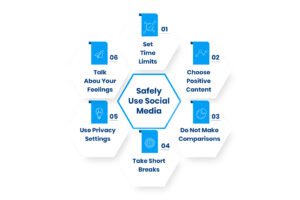
1-Set Time Limits
Time limits assist you in not spending long and stressful scrolling time. In addition, it enables you to concentrate on the things in real life without being distracted. Consequently, your Internet activity remains healthy and balanced.
2-Choose Positive Content
After reading inspirational pages and beneficial developers makes your mood better. It makes your feed full of inspirational posts rather than negative or stressful posts. Also, positive content aids in emotional well-being. In general, it transforms social media into a less hostile and more accommodating environment.
3-Do Not Make Comparisons
When your life is against ideal online pictures, it makes it even more insecure and stressful. Instead, you should remember that people display chosen moments. Furthermore, reaching the level of self-development enhances confidence. It, in its turn, helps to safeguard your mental health.
4- Take Short Breaks
Breaks allow you to unwind your brain and stop being bombarded with messages and data. It provides you with a chance to touch the real world and re-adjust emotionally. Moreover, taking a break decreases stress and tension. This is a habit that can help the user of social media under control.
5-Use Privacy Settings
Your privacy settings enable you to access information about who views your posts and allows contacts. This decreases a portion of messages and negativity online. In addition, it makes you feel secure. Consequently, this makes your experience online relaxed and comfortable.
6-Talk About Your Feelings
The effect of online stress can be minimized by sharing your emotions with someone. It makes you learn about feelings and receive support in case of necessity. Moreover, speaking leaves room for instructions. This facilitates the social media dilemma.
Social Medical Addiction and Mental Health
Social media addiction occurs when a person spends excessive time on the Internet and is unable to quit. It can gradually influence everyday life, as scrolling all the time distracts the mind and adds pressure. In addition, likes, comments, and fast updates may cause pressure. Consequently, the individual can end up being nervous, fidgety, or emotionally exhausted.
Moreover, social media addiction may have an impact on sleep, mood, and relationships. It also wastes time in in-person chats and engagements, thereby making one feel lonely. Negative posts and online drama can also impact confidence and happiness sometimes. Thus, limiting, having breaks, and mindfulness can be beneficial in safeguarding mental health.
Social Media Effects on Teens’ Mental Health
Social media takes a big part in the lives of teens, and as a result, it affects their emotions in many ways. Adolescents tend to compare themselves online to their appearance, ways of life, and accomplishments with those of other people, which leads to pressure. Furthermore, notifications all the time and the fear of missing out have the potential to make a person more stressed.
Likewise, social media may have an impact on sleep, school concentration, and self-esteem. There are also negative posts, cyberbullying, and trending disruptions that may affect mood. Nevertheless, it is possible to help such teens by engaging them on positive pages or finding friends whom they can trust. Hence, moderation, proper boundaries, and candid communication.
How To Stop Doomscrolling
1- Set Time Limits
Limiting oneself to a specific amount of time each day will allow one to limit the time one spends on social media. It will stop scrolling and minimize the stress that many updates will cause. In addition, it gives room to personal activities and interests.
2-Focus on Positive Content
Selecting positive or useful material enhances mood and decreases anxiety. It feeds your feed with inspirational content rather than bad news. It also encourages emotional welfare and drive. Thus, it is safer on social media when one concentrates on positive content.
3-Take Short Breaks
Giving yourself a little phone break is a good way to get some rest. Moreover, breaks help you to get in touch with real-life activities and people. This is a very easy habit to maintain your use of the Internet.
4-Turn Off Notifications
Switching off notifications helps to reduce distractions and minimize the temptation to look at your phone at all times. It also makes you concentrate on valuable activities and real life. All in all, disabling notifications makes the use of social media less stressful.
5-Talk About Your Feelings
Emotional pressure is decreased by disclosing your emotions to friends or family. It provides an opportunity to voice concerns and get approval. Besides, discussing your thoughts will make you better comprehend emotions. Hence, stress related to the Internet is easier to deal with through open discussions.
6-Practice Mindfulness
Learning to be mindful will allow you to be mindful and not be on autopilot when scrolling. It programs your head to pay attention to actual life and not the negative online. Besides, mindfulness enhances emotional regulation and anxiety. Consequently, it is possible to prevent doomscrolling.
Benefits Of Quitting Social Media for Mental Health
Here are some of the quitting social media benefits and social media mental health effects:
- It enhances the quality of sleep by eliminating the habit of scrolling at night.
- It makes everyday life work and activities more attentive and productive.
- It enhances self-esteem because it does not have unrealistic comparisons with others.
- It enhances the real-life relationship by getting more face-to-face contact.
- It sets up more time to spend on hobbies, exercising, and personal development.
- It helps to maintain the emotional level and a clearer mind.
- It teaches to be mindful and be present in the current moment.
- It minimizes the danger of social media addiction and bad habits.
- It permits room to reflect on oneself and individual wisdom.
End Note
Social media is a significant aspect of our everyday lives, yet the social media mental health effects cannot be neglected. Overuse may result in anxiety, depression, low self-esteem, and sleeping disorders. Mental Behavioral helps to gain valuable information on the understanding of these effects and their impact on emotional well-being. It is possible that with the knowledge of the negative repercussions, people can make conscious actions to establish limits.
Thus, it engages in mindful usage and focuses on physical life relationships. Limiting social media use and concentrating on desirable tasks may go a long way in enhancing mental acuity, mood stability, and general well-being. Living in a healthy digital habit can be made easier through reliable information sources such as Mental Behavioral, which contributes to long-term mental well-being.
FAQs
1. How does social media affect mental health?
Social media can influence mood and emotions. Excessive use may lead to anxiety, depression, low self-esteem, and feelings of social isolation. Constant comparison with others can also create stress and dissatisfaction.
2. What are the signs of social media-related stress?
Signs include feeling anxious when not checking social media, sleep problems, irritability, decreased productivity, and a constant need for validation through likes and comments.
3. Can taking a break from social media help?
Yes. Short or long breaks can reduce stress, improve focus, and increase overall well-being. It helps restore a balance between online and real-life interactions.
4. How can I control my social media usage?
Set daily time limits, turn off notifications, unfollow accounts that trigger negativity, and prioritize offline activities like exercise, hobbies, and in-person connections.
5. Where can I get reliable information about social media and mental health?
Trusted sources like Mental Behavioral provide evidence-based insights, tips, and strategies to maintain mental wellness while using social media responsibly.