

The fawn response is an often-overlooked survival mechanism that plays a significant role in how we react to stress and trauma. It’s a coping strategy where an individual attempts to please others or avoid conflict to ensure safety and acceptance, especially in emotionally difficult or threatening situations. This behavior often stems from past experiences of neglect, emotional manipulation, or abuse.
While it may seem harmless, the fawn personality can take a toll on one’s emotional well-being, leading to chronic stress, anxiety, and difficulty setting healthy boundaries. Understanding this response is the first step toward healing. Recognizing the pattern and taking proactive steps like therapy, self-compassion, and boundary-setting. So, it’s possible to break free from this cycle and regain control of your emotional health.
What Is Fawn Response?
The fawn reaction is one of the survival mechanisms that occur when an individual feels vulnerable or unsafe. The individual does not fight or run; rather, they freeze or turn submissive. Such a reaction is usually found in circumstances where one cannot escape and the person is helpless. It may occur when there is stress or other traumatic experiences.
The individual can make an effort to appease or placate the threat to evade harm in this state. As an illustration, they may be willing to conform to what other people want, albeit at the expense of feeling out of place. It is a way of adaptation despite the fact that it may not always be helpful in the long run. Knowing about the fawn fear response may make people more aware of when they are in this condition and how to manage that condition more effectively.
Symptoms Of Fawn Response
The following are the indicators of the fawn response:
- Being afraid of disappointing or hurting others.
- Apology is overdoing it, including the things beyond your control.
- Suppressing your emotions so as not to make people upset.
- Always in need of validation or confirmation from others.
- Getting lost in the expectation of everybody.
- Not touching the reality of your wants and needs.
- Difficult to assert oneself either in relationships or situations.
- Being overly responsible for others’ happiness or well-being.
What Causes Fawn Trauma Response?
- Childhood Trauma: It is also common to develop a Fawn response during childhood to handle neglect or abuse.
- Fear of Rejection: An individual can react by people-pleasing to prevent rejection or punishment.
- In the case of an unsafe or unpredictable environment, it is a survival mechanism.
- Low Self-Esteem: Typically, individuals feel unworthy of love or respect, and when individuals feel that they are unworthy.
- Control by others: Narcissistic or manipulative people can stimulate the fawn fear response through emotional manipulation.
Fawn Response Examples
The following are some examples of fawning behavior:
- Agreeing to someone even when you do not mean it.
- Stay silent: when you are not at ease, do not draw attention.
- Attempt to correct the problems of others to obtain their acceptance.
- Excessive apology for things that are not under your control.
- Trying to assimilate by not caring about personal values or beliefs.
- It is possible to do additional work, even when it is not your job.
- Surrendering to demand so that rejection or conflict is avoided.
Fawn Response in Relationships
The fawn response may manifest in a relationship in a situation where one attempts to avoid confrontation by satisfying their partner. They may even conform to what the other individual wishes to please them instead of telling them what they want. This may occur when one has the fear of rejection or rage, hence attempts to maintain the relationship peacefully by being excessively accommodating.
Nevertheless, fawn response may be the cause of long-term problems. When a person ignores their feelings or desires all the time, it may cause an imbalance in the relationship. Eventually, this may result in resentment or emotional fatigue. One should be able to see when the fawn fear response occurs and should learn to communicate frankly and insistently in the relationship.
The Fawn Response in Adults
Fawn in adulthood is a type of coping mechanism that was created during childhood as a response to coping with trauma. This response may be applied even by adults whenever they are threatened. This reaction may also incorporate people-pleasing reactions, whereby one concurs with what other people say to prevent argument or friction.
When an adult is in a difficult situation, they may experience the desire to fawn or appease others to be safe. Fear of rejection or punishment is likely to cause the response. This fawn reaction might develop with time, and it may become difficult to draw boundaries or say no; therefore, people receive consent to be aware of the fawn fear response, and they may start recovering their past experiences.
Fawn Response to Narcissistic Abuse
Fawn’s emotional reaction is usually prevalent in narcissistic abuse. This reaction can save them from conflict or additional damage. It can be mostly motivated by fear, where the person feels that they have to appease the narcissist to be safe. Fawn response in the long run becomes a survival strategy, which may be difficult to break.
This form of behavior has its basis in trauma and fear. To maintain the peace, they can repress their emotions. This can cause them to become trapped in the relationship. It is important to realize the fawn response in narcissistic abuse as a prerequisite to healing. This is one of the patterns that can be understood to be able to take back the power and establish healthier boundaries.
How To Heal the Fawn Response?
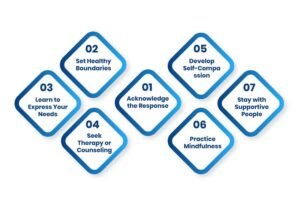
Acknowledge the Response
The initial step in species healing the fawn stress response is becoming aware when it is taking place. You can begin to handle it by realizing that you are more concerned with the needs of others and not your own. Consciousness breaks the people-pleasing cycle.
Set Healthy Boundaries
Begin by getting used to saying no when something does not agree with your values or needs. Boundaries are not very comfortable initially, yet it is needed to live with respect for oneself and emotional well-being. Gradually, this will flow into a natural process.
Learn to Express Your Needs
Be able to speak up, though it may be challenging. Practice expressing yourself and what you want by using little, risk-free scenarios. The development of this habit will make you become more confident and assertive.
Seek Therapy or Counseling
Discussion with a professional may assist you in realizing the deeper causes of trauma response fawn. Therapy offers a secure platform to heal previous traumas and come up with more beneficial coping mechanisms. It is capable of helping you acquire new patterns of reacting to stress.
Develop Self-Compassion
Be kind and understanding to yourself instead of criticizing yourself. Fawn response takes time to heal, and one must be patient with oneself. The development of self-compassion will allow you to develop a more balanced relationship with yourself and other people.
Practice Mindfulness
Mindfulness is one of the practices that can assist you to remain here now and even be conscious of how you feel. It also enables you to be aware of when you are slipping into a fawn response and select another, healthier response. Meditative sessions regularly create emotional resilience.
Stay with Supportive People
Find mutually respectful and open relationships. Positive changes will be reinforced by the presence of people who promote healthy boundaries and self-expression. Positive conditions facilitate healing and make it more lasting.
Tips To Manage Freeze Fawn Response
- Be aware when you are descending into the freeze or fawn.
- Bring yourself down by breathing or touching something.
- Self-compassion Practice not blame yourself for the response.
- Draw hard lines in little, ordinary circumstances.
- Develop emotional strength by taking care of oneself and relaxing.
- Be mindful to be in the present and overcome overwhelming emotions.
- Take time and be patient when writing up the response.
End Note
How to stop fawn response? The response to overcome a fawn behavior is to be aware of the behavior and know what it is. The first step would be to establish healthy boundaries and learn not to be afraid to say no. Show yourself compassion and recognize personal needs and feelings. Cognitive Behavioral Therapy (CBT) may be particularly effective in the reprogramming of thought processes that lead to the dominant response fawn.
Moreover, professional assistance, a therapist or counselor, may also be beneficial to have a sense of direction in recovering from the traumatic experience of the past. Group therapy or a support group may also make you feel less lonely and get insights from others going through similar problems. After a short time, one will be able to heal, though it will require regular efforts; it is achievable to be able to control again and live a more genuine life. You can read the articles in Mental Behavior in order to obtain more information and details. You will receive the helpful content and the useful information.
FAQs
How to heal the fawn response?
Treatment of fawn response will be to identify the behavior and establish healthy boundaries. Be self-aware, focus on your needs, and be in therapy to overcome the trauma that causes people-pleasing patterns in the first place.
What to do to come out of a fawning response?
Begin by saying no when you are doing too much of it, and learn to be assertive when circumstances demand. Therapy will assist you to learn and stopping the cycle, and journaling will assist you in knowing your emotional triggers.
What can be done to remedy fawn trauma response?
Fawn’s trauma response cannot be overcome without focusing on the cause of the problem, which in this case is childhood trauma. One way by which they can be rebranded is through therapy to develop self-esteem.
What causes the fawning response?
Fawn response may be easily elicited by fear of rejection or punishment, particularly in relationships where emotional manipulation or emotional abuse occurs. It is a survival strategy to evade war and violence.
Is fawning a learned behavior?
The fawn can indeed unlearn the response with time and effort. Regular self-care, boundaries, and professional assistance are some of the methods that may stop the cycle and help to grow healthy coping strategies.