


How to stop crying? So, you are not the only one who has ever wondered how to stop crying when emotions take over. Crying may be a result of sadness, anger, or even relief, and knowing how to control it allows you to remain composed and confident.
It could be breathing deeply, distracting the mind, or even finding solace in grounding methods, but there are feasible ways of getting control back again. Knowing how to avoid crying is not about not feeling, but being able to balance and control emotions. In this article, let’s discuss straightforward but useful ways to prevent tears and become more emotionally resilient.
How to Stop Crying at Work?
Weeping at the workplace is unprofessional and embarrassing. When you are about to cry in a meeting or at your desk, use the following inconspicuous ways:
- Take a Break: Get yourself out and go to the restroom, or go to a quiet breakroom, or go outside. Switching your surroundings can help you reset.
- Look Up: While looking up, where the tears are streaming down your face, sometimes it is physically impossible not to tear up, and you have to look up.
- Tongue to the Roof of the Mouth: This is a simple exercise and can be a little distraction that will get you under control without anyone being aware of it.
How to Stop Crying at Night?
It is a normal practice to cry at night because the silence and darkness may leave you alone with your thoughts. If you are not coping with this, take into account the following methods:
- Do not watch the screen or do anything exciting before bed. Rather, attempt to read a book, listen to music that soothes, or do some light stretches.
- Dumping your stress on paper may also give you a sense of relief and clarity, as well as an insight into why you can’t stop crying.
- Before going to sleep, you should think about three things you are grateful for. This can assist in distracting yourself from the negative thoughts to the positive ones.
How to Stop Crying When Sad?
When you find yourself crying due to intense sadness, the task does not always consist of not crying but of learning to deal with the sadness in a healthy way.
- Go ahead and be sad. Avoid being judged, find a safe place and time to weep. Squelching of emotions is likely to increase them in the future.
- Disclose your emotions to a close friend, relative, or therapist. It would be less overwhelming to tell someone that you are sad.
Why Can’t I Stop Crying?” Addressing Frequent Tears
In case you feel that you are always crying or are crying too easily, then that could be an indication that there is also a problem. The first step to managing it is to understand its cause.
At times, the tears appear to emerge unexpectedly. This is disorientating and painful. Potential reasons include:
- Hormonal Fluctuations: Hormone variations associated with the menstrual cycle, pregnancy, or menopause may also have a big effect on your mood and cause you to cry more often.
- Burnout and Stress: The long-term stress and fatigue may reduce your emotional stamina, and this means you are more likely to tear up. It may be your body telling you that you need to relax.
When you find yourself asking why you can’t stop crying, it can be useful to monitor your moods and crying sprees to see whether there is any pattern.
How to Stop Crying in Specific Situations?
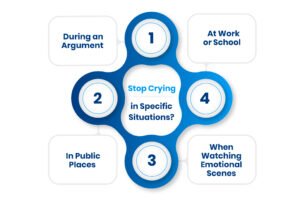
Crying is a normal emotional process, but at times it comes at the most inappropriate time, when you may be fighting, at work, or in front of other people. A practice on how to control your emotions can help you calm down during these situations. The following are easy methods of preventing crying under certain circumstances.
1. During an Argument
When the passion is strong, breathe deeply and concentrate on even breathing rather than talking right away. Stop and think before replying, and remember to remain calm, as you have more control. In case of necessity, excuse yourself briefly to get your thoughts together and then resume the discussion.
2. At Work or School
When you are going to cry, think of something neutral, like counting objects, or thinking of a memory that is relaxing. Go to the bathroom, breathe slowly, and pour cold water on your face. This is used to make the emotions less intense and restore sanity.
3. In Public Places
Take a small break and go to a quiet place or go outside. Take deep breaths, do not look at each other, and think of something reasonable or good. Provided you can, play some soothing music or be aware of what is around you until the feeling goes away.
4. When Watching Emotional Scenes
In case movies or songs can easily make you cry, remind yourself mentally that it is fiction or it is simply a story. Focus on the evaluation of the scene, such as acting or the camera work, rather than the emotion of the scene. Emotional detachment is a practice that can be used to overcome tears.
How to Avoid Crying and Build Emotional Resilience?
When you need to cease crying so easily, emotional resiliency can be built. This is the ability to learn stress coping and adversity coping.
- Be mindful and meditate: Mindfulness practice is one of the most useful practices that can assist you in being more aware of your emotional triggers and provide some distance between a feeling and your response to it.
- Focus on self-care: You should make sure that you are sleeping well, eating healthy, and exercising every day. The body is healthy, and so is the mind.
- Find professional help: In case you think that you are shedding tears all the time, and it is affecting your life. So, a conversation with a therapist or counsellor may equip you with tools and techniques to help you control your emotions.
How to Stop a Headache After Crying?
The tension headache is among the side effects of a long crying session. Your facial and neck muscles are put under a lot of strain, and coupled with dehydration, this results in pain. The following is how to prevent a headache when crying:
- Hydrate: Drink lots of water to overcome the loss of fluids through tears.
- Apply a cool compress: A cool, wet cloth should be applied to your forehead or around your eyes. It could assist in constricting blood vessels and inflammation.
- Massage your temples: Rub the temples, scalp, and neck with the fingertips and work out the muscle tension.
- Rest in a dark, quiet room: Minimize the input of the senses by sleeping in a soothing space. This will alleviate the pain of a headache.
Closing Thoughts
Crying is a fundamental part of the human experience. While learning how to stop crying in certain moments is a valuable skill, it’s equally important to embrace your emotions and find healthy ways to express them. By understanding your triggers, practicing grounding techniques, and building emotional resilience, you can navigate your feelings with greater confidence and control.
If your crying feels excessive or is accompanied by other symptoms of depression or anxiety, don’t hesitate to reach out to a healthcare professional. Taking care of your emotional well-being is a sign of strength. To receive more information and an in-depth understanding, you can refer to Mental Behavioral.
FAQs
Why do I cry so easily?
Easy crying may be caused by stress or depression, frustration, and even hormonal variation. It is an instinctive emotional reaction. Nonetheless, the frequent crying can also be used in association with anxiety, depression, or emotional exhaustion. In case it occurs frequently or disrupts everyday life, it is worth discussing with a mental health specialist.
What can I do not to cry at once?
Try these quick steps:
- Breath slowly and deeply to relax your body.
- Loosen the muscles of your face and open your mouth.
- Think of another thing, such as counting backward or writing out what an object looks like.
- Get out of the situation and get yourself to a quiet area to get yourself together.
Is repression of tears healthy?
It is okay to suppress tears occasionally, particularly in the case of a public scenario, but it might lead to a high level of stress and tension in the case of constant suppression of emotions. It is better to cry in a safe place and then concentrate on calming activities afterward, either through journaling or talking to someone you can rely on.
How can one prevent crying during emotional conversations?
Breathing- Deep breathing and slow speech.
- You can distract the brain by pinching your nose bridge or pushing your tongue up to the top of your mouth.
- Think them out in advance before the dialogue so that you are more in control.
When do I need assistance in case I fail to stop crying?
In the event you cry a lot, feel hopeless, or can’t distinguish a definite cause of crying, then it may be a symptom of depression, anxiety, or emotional burnout. The assistance of a therapist or a counselor can offer coping skills and emotional support.